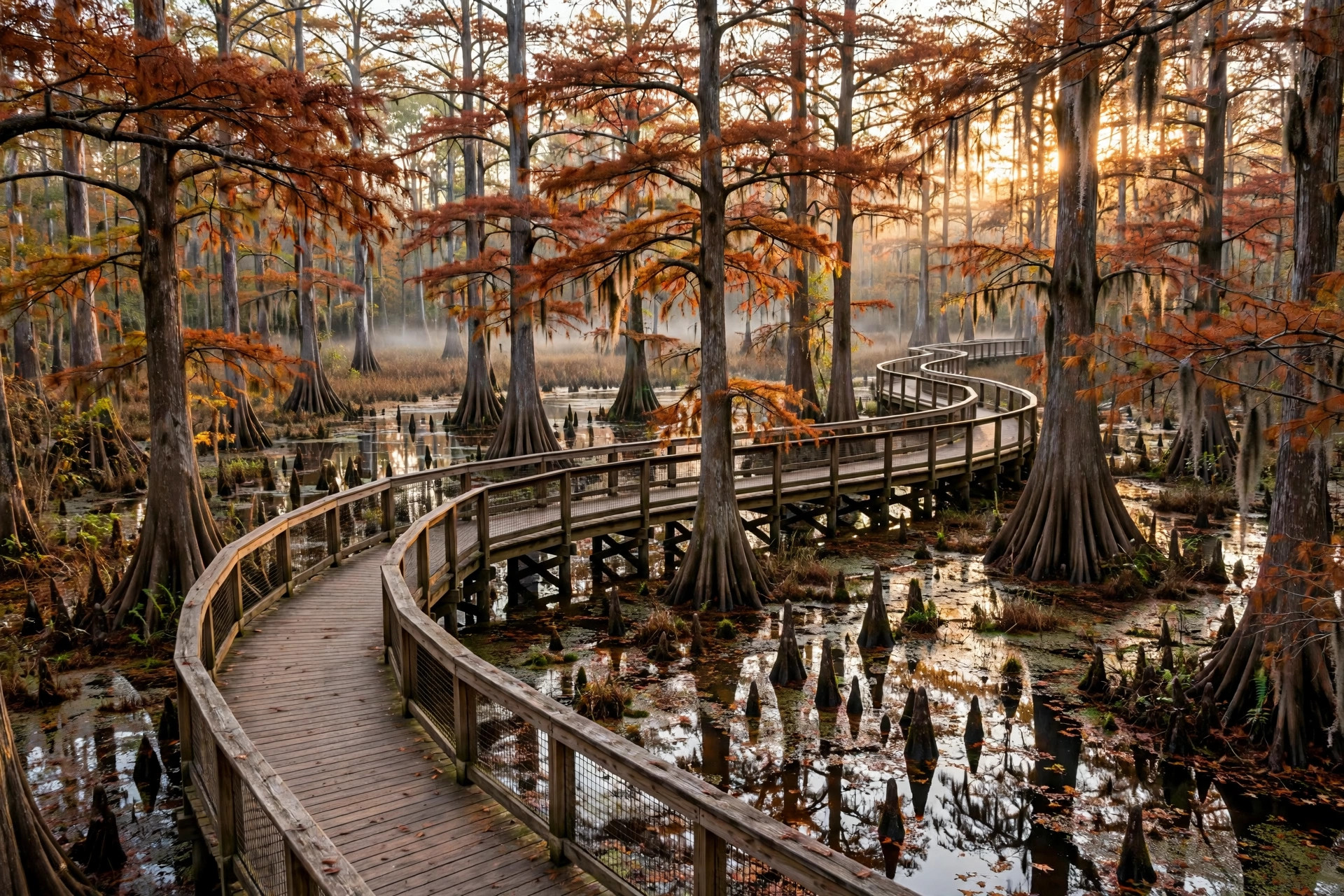
South Carolina keeps one of America's quietest national parks just half an hour from its capital, and November is the month it shows off. Congaree National Park in November trades summer's heat and mosquitoes for mild days, russet cypress colour and a boardwalk you can often have almost to yourself.
Why November is Congaree's sweet spot
November is widely rated the park's most underrated month. Daytime highs average around 63°F, with nights near 41°F, and the bald cypress trees turn russet and orange as fall colour peaks in early November. Mosquitoes, the park's summer scourge, are almost nonexistent, and the trails stay dry. Weekday crowds are thin, so a morning on the boardwalk can feel like a private tour.
Congaree protects the largest remaining expanse of old-growth bottomland hardwood forest in the United States, according to the National Park Service. Towering loblolly pines, bald cypress and water tupelo rise from a floodplain the Congaree River refreshes about ten times a year.
Walking the Boardwalk Loop Trail
The Boardwalk Loop Trail is the essential Congaree experience. The flat, elevated loop runs about 2.4 to 2.7 miles from the Harry Hampton Visitor Center and takes one to two hours at a gentle pace. It needs no permit and no reservation, and it is stroller and wheelchair friendly on its shorter sections.
Walk it in the morning, when the light is low and the parking area is quiet. Look for the buttressed bases of the cypress trees standing in shallow water, listen for pileated woodpeckers, and watch for deer, active in November during the rut. Pick up the self-guided brochure at the visitor centre before you set off.
After the boardwalk
If you want more miles, the Weston Lake Loop adds a quieter woodland circuit, and the Bluff Trail links the visitor centre to the river. Both stay easy and flat — this is a park for looking up, not climbing up.
Paddling Cedar Creek
The second way to see Congaree is from the water. Cedar Creek winds through the floodplain forest, and October and November bring favourable water levels and comfortable paddling weather. Bring your own canoe or kayak, or book a guided trip with a Columbia outfitter. Ranger-led canoe tours also run on Fridays and Saturdays through mid-November — check the park's schedule before you go, as dates depend on water levels.
On the water, the forest closes in overhead and the wildlife changes: herons, otters and turtles are regular sightings, and the quiet is broken mostly by woodpeckers.
Practical tips for a November visit
Getting there: Congaree sits about 30 minutes south-east of Columbia, South Carolina, and makes an easy day trip from the city. Entry is free, and the park itself is open 24 hours a day, every day of the year. The Harry Hampton Visitor Center is open daily from 9am to 5pm, except on federal holidays.
Check before you go: Congaree floods regularly, and after heavy rain the boardwalk and other trails can close temporarily. Check the park's current conditions page at nps.gov/cong before you leave, and carry layers — a November morning near freezing can turn into a mild afternoon in the 60s, and shaded trails stay cold longer than the open sky suggests.
What to pack: layers, a warm hat and gloves for the morning, sturdy walking shoes and water. Insect repellent is barely needed in November, but it costs nothing to carry.
A one-day Congaree itinerary
Morning: Arrive before 9am, pick up the boardwalk brochure at the visitor centre, and walk the full Boardwalk Loop while the light is golden. Midday: Picnic near the visitor centre, then walk the Weston Lake Loop. Afternoon: Paddle Cedar Creek if conditions allow, or head back toward Columbia for dinner.
Related travel guides
- Cuyahoga Valley National Park in November: Quiet Trails Guide
- New River Gorge in November: Quiet Trails & Bridge Views
- White Sands National Park in November: Dunes, Sledding and Sunsets
Tags: #Congaree #CongareeNationalPark #SouthCarolina #NationalParks #USATravel #FallColour #BoardwalkTrail #TravelGuide
Comments
Post a Comment