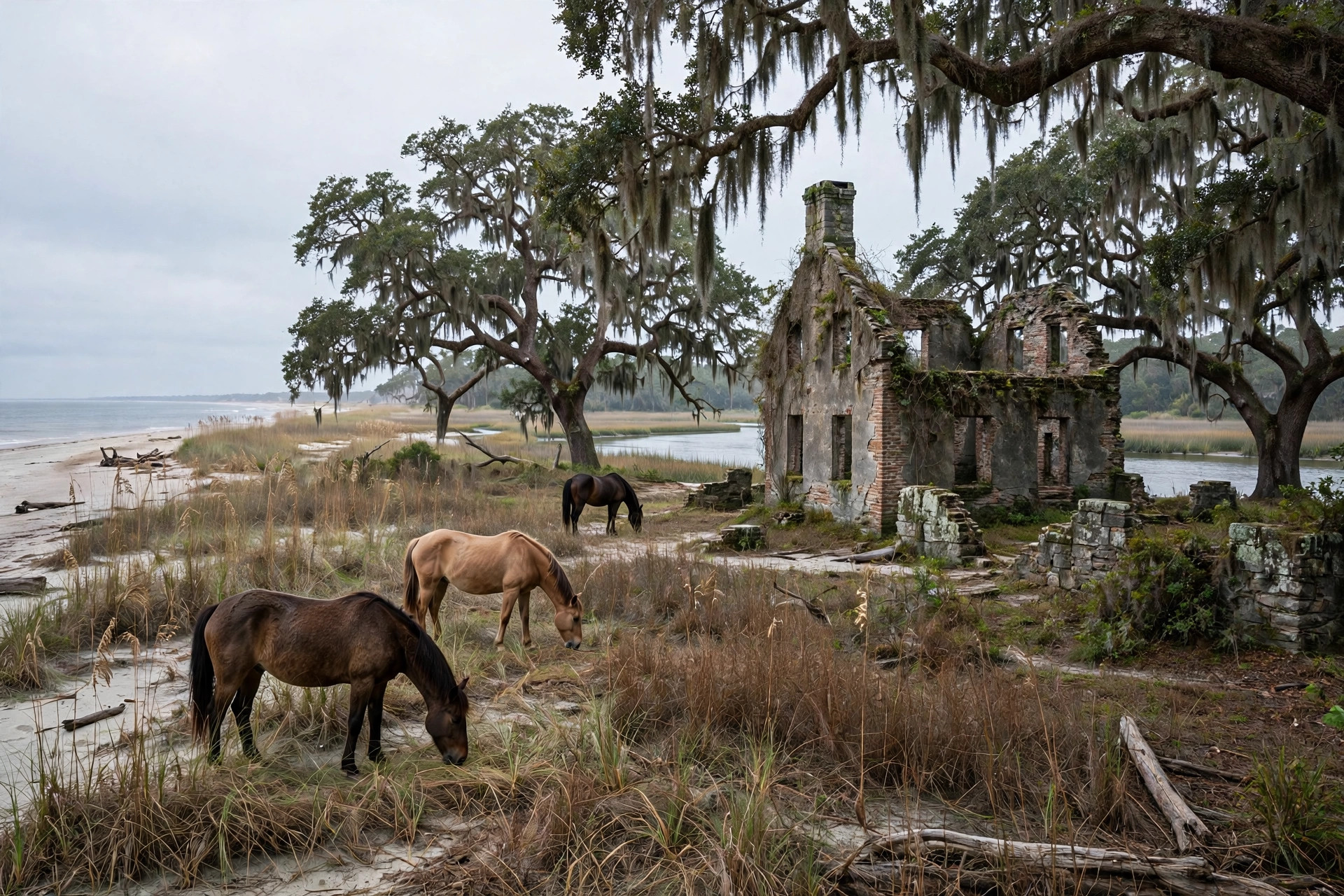
There is no bridge to Cumberland Island, no road, no car park and no shop. Georgia's largest barrier island is a National Seashore where wild horses graze the lawns of a ruined Gilded Age mansion, live oaks drip with Spanish moss, and 18 miles of undeveloped beach stretch out with barely another person in sight. November is one of the best months to go: the summer heat and biting insects have eased and the light turns soft and golden.
Getting to Cumberland Island by ferry
The only regular public access is the passenger ferry from St. Marys, Georgia, a crossing of about 45 minutes across Cumberland Sound. The ferry is foot-traffic only, so you walk everywhere once you land. According to the ferry guide published by KOA, boats run seven days a week from 1 March to 30 November, with morning and midday departures and afternoon returns. Reservations are strongly recommended, as the popular departures sell out, especially at weekends.
Budget roughly $40 per adult for the round-trip ferry, plus about $15 per adult park entry, based on current travel-guide figures — check the official ferry site for today's rates before you book, as prices and sailing times can change. Remember that the Atlantic hurricane season runs through November, so check the forecast before you travel.
Dungeness ruins and wild horses
Most day visitors step off at the Dungeness dock and walk the short trail to the ruins of the Carnegie family's mansion, a grand house destroyed by fire decades ago. Wild horses — feral descendants of horses brought to the island long ago — graze the lawns around the ruins and along the beach. They are not tame, so admire them from a distance and never feed them.
Nearby, the small Ice House Museum tells the island's story, and the Plum Orchard Mansion, another Gilded Age home, offers a glimpse of how the wealthy once holidayed here. Guided van tours and ranger programmes run on some days and are worth booking if you want the history without the long walks.
Beaches, trails and wildlife
From Dungeness, a short walk through the maritime forest brings you to the Atlantic beach — wide, empty and backed by dunes. With more than 50 miles of trails, the island suits walkers, cyclists and birdwatchers. Deer, wild turkeys, armadillos and a rich mix of shorebirds share the island with the horses, and the marshes on the western side are a haven for wading birds at low tide.
November's cooler days make the longer hikes comfortable. Pack layers: mornings can be chilly on the open ferry, while the beach warms up by midday. Bring all your food and water — there are no concessions on the island — plus sun protection and a cup for the water coolers near the docks.
Practical tips for a November day trip
Best time to visit: October and November bring cooler weather and far fewer visitors than summer. Getting there: St. Marys is about two hours from Savannah via I-95, so the island works as a long day trip or a stop on a Georgia coast road trip. Getting around: on foot, or by bicycle rented on the island. Overnight: backcountry camping is available with a permit, but day visitors must catch the last ferry back.
A suggested one-day itinerary
Take the morning ferry from St. Marys and step off at Dungeness. Spend the late morning at the ruins and the Ice House Museum, watching for horses on the lawns. Walk through the maritime forest to the beach for a picnic lunch, then head back for the afternoon ferry. Finish with a seafood dinner on the St. Marys waterfront — a fitting end to a day far from the mainland.
Related travel guides
- Chincoteague in November: Wild Ponies & Quiet Island Charm
- Cape Cod in November: Quiet Beaches, Seals and Coastal Charm
- San Juan Islands in November: Quiet Ferries & Friday Harbor
Tags: #CumberlandIsland #GeorgiaCoast #USATravel #NationalParks #WildHorses #IslandTravel #NovemberTravel #TravelGuide
Comments
Post a Comment