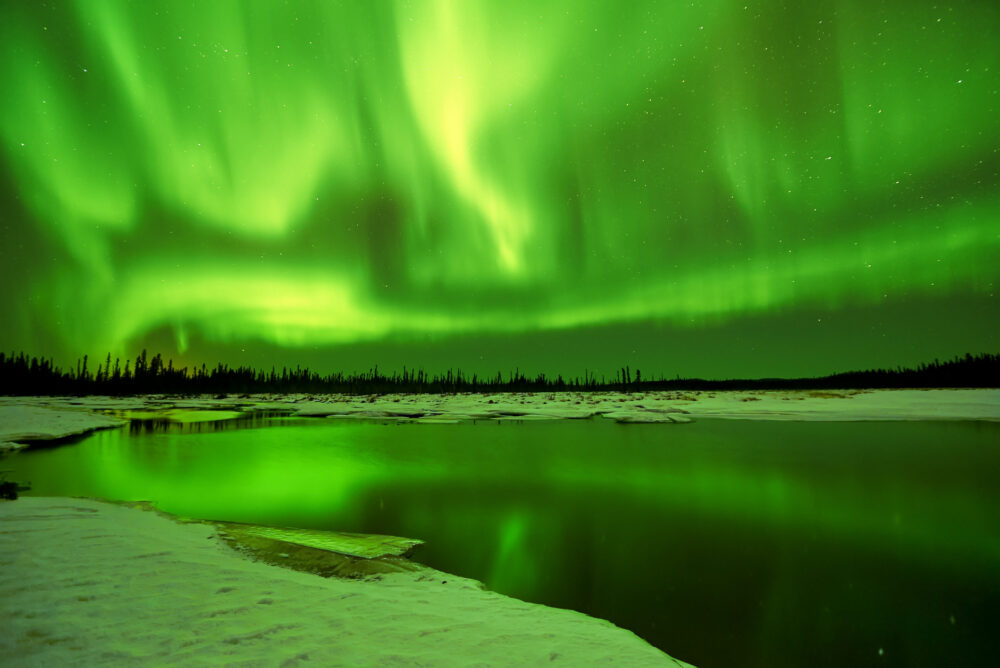
In November, Fairbanks trades daylight for darkness — and that is exactly the point. Alaska's second city sits at 64.8°N, directly beneath the aurora oval, and by mid-November the sun is up for only about six and a half hours a day. What the short days take away, the long nights give back: green curtains of northern lights and steaming hot springs.
Fairbanks in November: chasing the northern lights
The aurora season around Fairbanks runs roughly from 21 August to 21 April, and November sits squarely inside it. The University of Alaska Fairbanks notes that with clear skies and at least three nights, seeing the lights is highly likely — so plan a stay of three nights or more rather than a quick overnight. Activity usually peaks between 10pm and 2am, and even on quiet geomagnetic nights the lights can appear directly overhead here.
Escape the city glow for the best show. Cleary Summit, about 20 minutes north-east of town, is a favourite local viewpoint, and guided aurora tours run nightly with small vans chasing clear skies.
Soak under the lights at Chena Hot Springs
About 60 miles north-east of Fairbanks, Chena Hot Springs Resort pairs a 106°F geothermal rock pool with its own aurora programme. Soaking outdoors while the lights ripple overhead, steam rising off the water into air far below freezing, is one of Alaska's great contrasts. A pool day pass costs about $20 for adults and $17 for children, and the resort's five-hour winter aurora viewing tour runs about $125 per person.
Dog sledding season begins
Dog sledding on snow typically runs from about 1 November to 20 April, so November is the first chance of the season to ride behind a working team. A 30-minute ride through snowy spruce forest, with a musher explaining the dogs and the sport, runs from about $115 per person. Book a few weeks ahead — the best kennels fill quickly once the snow settles.
Daylight hours: museums, pipeline and North Pole
Use the short days well. The University of Alaska Museum of the North is the state's premier museum, with Blue Babe — a 36,000-year-old steppe bison mummy — a 1,500-pound gold display, Alaska Native art and northern lights photography. Admission is roughly $18–20 for adults, and winter hours are typically 10am to 5pm, so confirm before you go. The Morris Thompson Cultural and Visitors Center gives a free introduction to Interior Alaska's history and cultures.
Then drive 15 minutes south-east to North Pole, where the Santa Claus House is open year-round and free to enter. It is a Christmas emporium built around a 42-foot Santa statue, with reindeer out back and postcards you can send postmarked from the North Pole.
Practical tips for a November visit
Weather: NOAA normals put Fairbanks' November average high near 12°F, with lows near -4°F, and the first serious cold snaps can arrive in the second half of the month. Pack gear rated well below freezing.
Getting there: fly into Fairbanks International Airport (FAI). Rental cars sell out in peak aurora season, so reserve early and ask for a vehicle with winter tyres.
Getting around: Fairbanks is compact, but aurora viewpoints, Chena Hot Springs and North Pole all need a car or a tour. Roads are ploughed but icy — allow extra time for every drive.
A three-night Fairbanks mini-itinerary
Night one: arrive and join a guided aurora tour. Day two: Museum of the North and the Morris Thompson Center by day, then an aurora watch from Cleary Summit. Day three: an afternoon at Chena Hot Springs — pool, Ice Museum, dinner — with aurora stops on the drive home. Day four: a morning dog sled ride, then the Santa Claus House in North Pole before your flight.
Related travel guides
- Juneau in November: Mendenhall Glacier & Downtown Guide
- Fort Davis in November: Dark Skies, Buffalo Soldiers & Star Parties
Tags: #Fairbanks #NorthernLights #Alaska #AuroraBorealis #ChenaHotSprings #USA Travel #WinterTravel #AlaskaTravel
Comments
Post a Comment