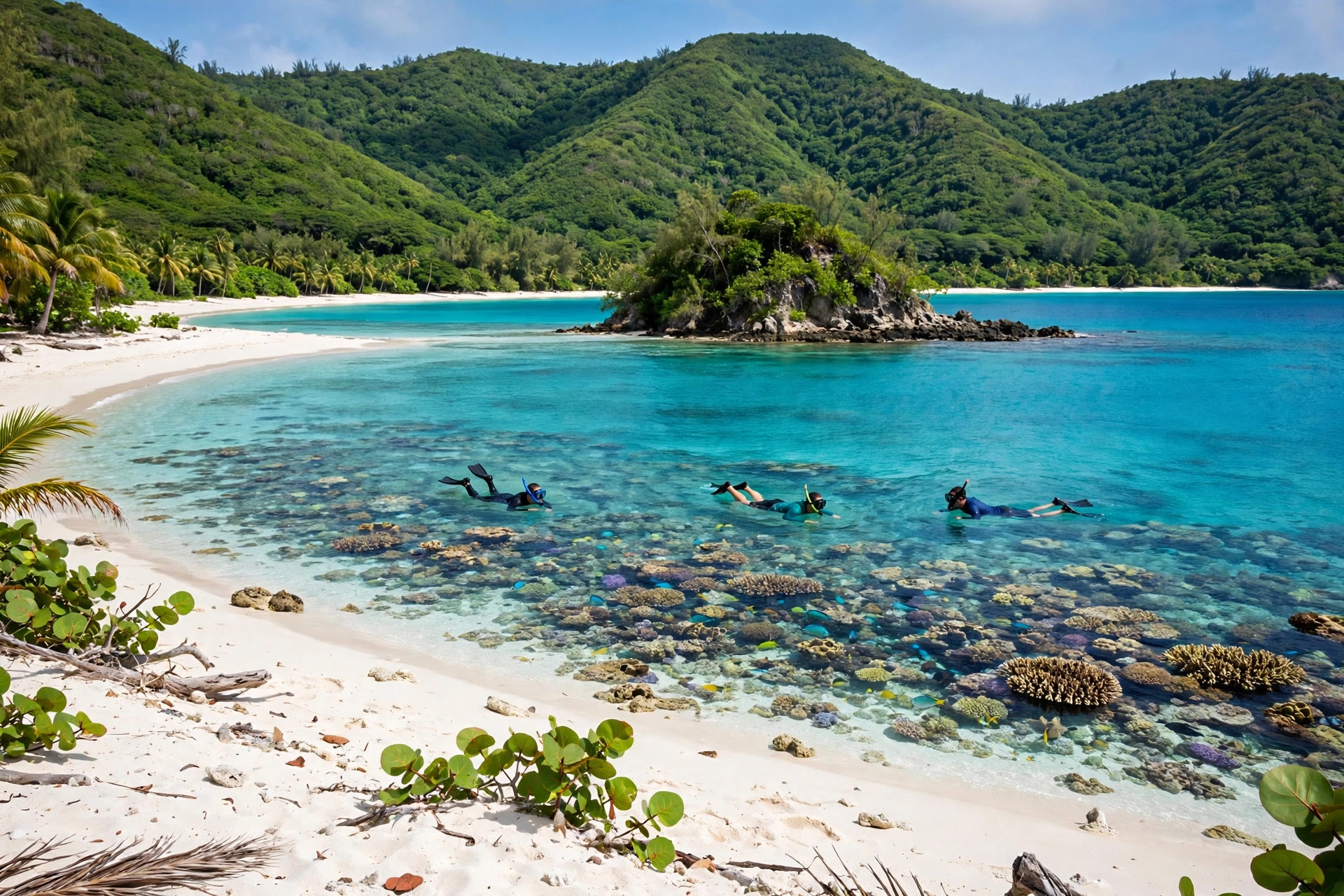
November in the Caribbean has a rare quality: the sea is still warm, the crowds have thinned, and the island feels like it belongs to the people who live there. That is St. John in the US Virgin Islands — most of it protected as Virgin Islands National Park, which covers around two-thirds of the island. If you want a warm-weather escape before winter sets in, this is one of the best-value weeks of the year to take it.
Why November works for Virgin Islands National Park
November is shoulder season on St. John. Daytime highs sit around 86°F (30°C), nights near 77°F (25°C), and the sea holds close to 82°F (28°C) — warm enough for long snorkelling without a wetsuit. With the December high season still to come, beaches and trails are quieter and stays are often cheaper.
November is one of the island's wetter months, with rain on roughly half of the month's days — mostly short afternoon bursts that clear within half an hour, with mornings dry more often than not. Hurricane season runs until 30 November, so travel insurance covering weather disruption is worth carrying.
Trunk Bay and Cinnamon Bay: the park's best beaches
Trunk Bay is the park's most famous beach: a wide crescent of white sand, calm turquoise water and an underwater snorkelling trail with signs identifying the coral and fish below. It is the park's only fee beach, with a small per-person charge at the gate, and the busiest — arrive before 9am for shade and quiet sand. Cinnamon Bay, a short drive east, is longer and roomier, with a campground and ruins of an old sugar plantation at its edge.
Quieter water nearby
For calmer, crowd-free swimming, try Maho Bay, where green turtles are often seen grazing in the shallows, or Hawksnest Bay, a short hop from Cruz Bay with easy shore snorkelling. Both sit on the sheltered north shore, in the lee of the east breeze.
Trails, ruins and snorkelling beyond the sand
The park is far more than its beaches. The Reef Bay Trail drops through dry forest to a sugar-mill ruin and ancient petroglyphs — a half-day hike best started early, with plenty of water. On the North Shore Road, the Annaberg Sugar Plantation ruins recall the island's plantation era, with views across to Tortola. Off the south coast, the Virgin Islands Coral Reef National Monument shelters elkhorn coral, brain coral and sea fans in just a few metres of clear water.
Getting to St. John and getting around
St. John has no airport. Fly into Cyril King Airport on St. Thomas, taxi to Red Hook (about 30 minutes), then catch the passenger ferry to Cruz Bay — about 20 minutes on the water, roughly hourly, at US$8.15 one way for a non-resident adult. The Charlotte Amalie route resumed on 1 November 2026, a useful option for cruise arrivals, at US$13 one way. US citizens need no passport — St. John is a US territory, the currency is the US dollar, and English is spoken throughout.
Once on the island, taxis serve the main beaches, but a rental car gives you real freedom — book early, as the island's fleet is small. Note that St. John drives on the left, and the steep roads reward a slow pace. Car barges also run from Red Hook if you bring a vehicle from St. Thomas.
A 2-day St. John itinerary
Day 1: early ferry to Cruz Bay, breakfast in town, then straight to Trunk Bay for the snorkelling trail before the crowds arrive. Afternoon at Cinnamon Bay, with a sunset drink back in Cruz Bay. Day 2: hike the Reef Bay Trail in the morning, stop at Annaberg on the way back, and finish with a lazy afternoon at Maho Bay watching for turtles.
Related travel guides
- Cumberland Island in November: Wild Horses, Ruins & Quiet Beaches
- San Juan Islands in November: Quiet Ferries & Friday Harbor
- Cape Cod in November: Quiet Beaches, Seals and Coastal Charm
Tags: #VirginIslands #StJohn #USVirginIslands #NationalParks #TrunkBay #CaribbeanTravel #USATravel
Comments
Post a Comment